On this page
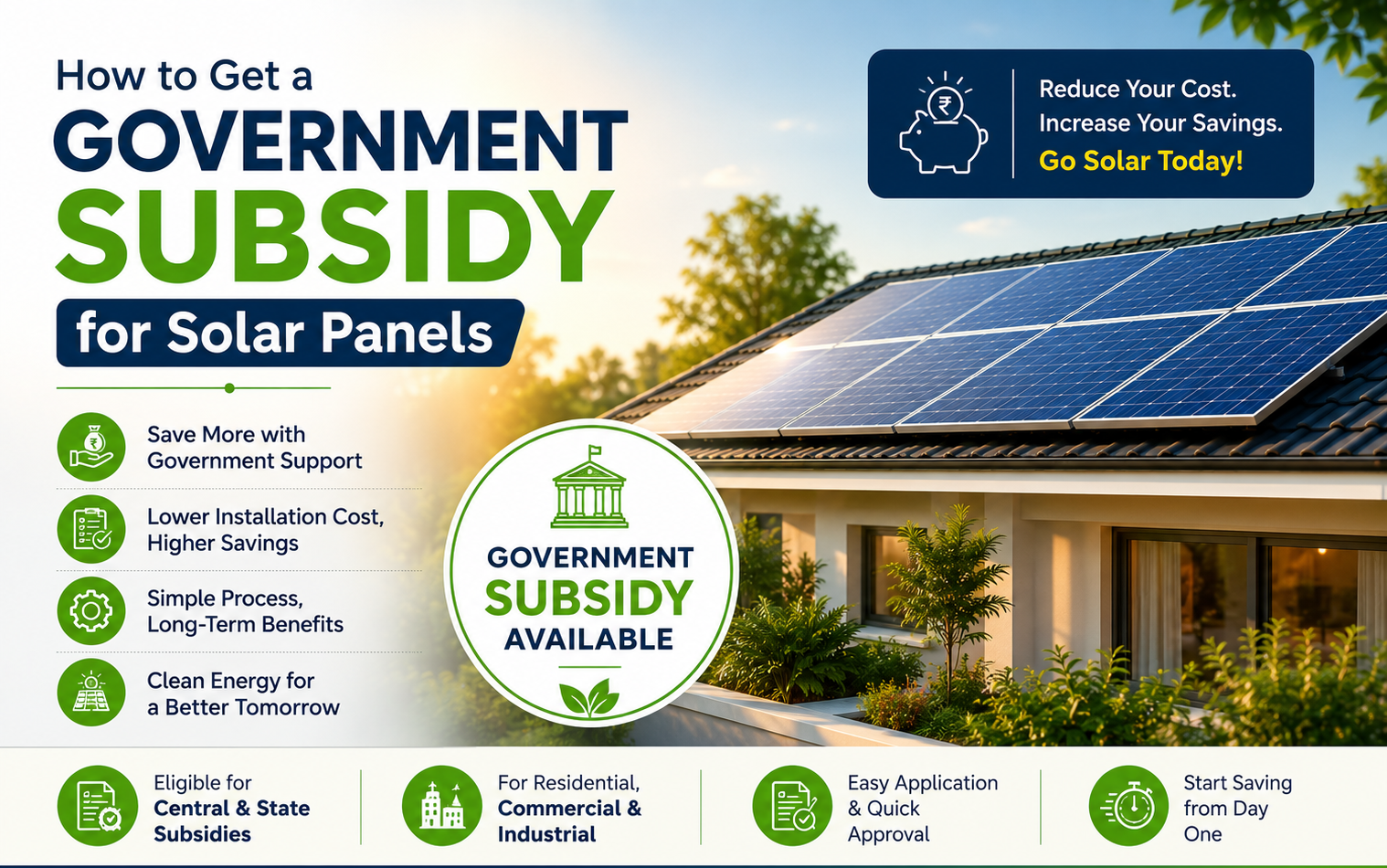
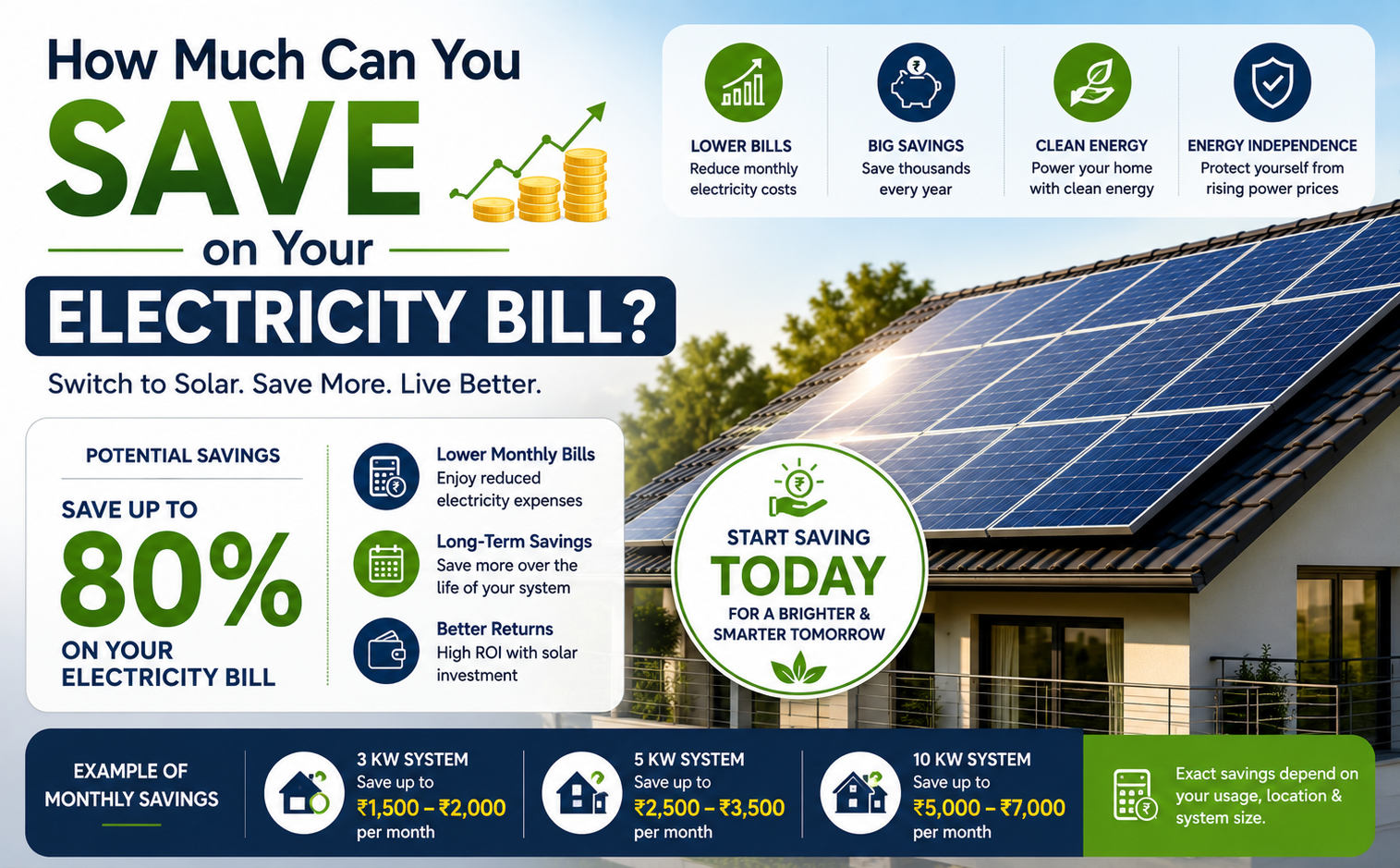
PM Surya Ghar: Muft Bijli Yojana is the Government of India's scheme to put solar panels on the roofs of ordinary homes. It pays part of the cost back to you, up to ₹78,000, so the system pays for itself sooner and your monthly electricity bill drops.
- Central subsidy
- up to ₹78,000
- System size it covers
- up to 3 kW
- Free electricity it aims for
- up to 300 units a month
- Where you apply
- pmsuryaghar.gov.in
What the scheme is
The Centre launched PM Surya Ghar in February 2024 with a target of rooftop solar on one crore homes by March 2027. The idea is simple: your panels make electricity during the day, your home uses it first, and the government pays a fixed amount towards the cost of the system.
Any power your home doesn't use is sent to the grid through a two-way meter, and you get credit for it on your bill. With a system sized to your usage, many homes end up paying little or nothing for daytime electricity.
How much you get
The central subsidy depends only on the size of the system, not on its price. It is ₹30,000 for each of the first two kilowatts and ₹18,000 for the third. Above 3 kW it stays at ₹78,000.
- ₹30,0001 kW
- ₹60,0002 kW
- ₹78,0003 kW or more
- up to ₹1.56 lakh3 kW in Delhi
A typical home using 150 to 300 units a month needs a 2 to 3 kW system, which sits right in the band the subsidy covers best. Your estimated system size is a quick way to see where you fall.
Delhi and Telangana
In Telangana there is no general state top-up for homes at the moment, so in Hyderabad the central subsidy of up to ₹78,000 is the amount to plan around.
Who can apply
- You are an Indian citizen.
- You own a house with a roof that can take solar panels.
- The house has a valid electricity connection.
- You have not already had another rooftop solar subsidy for it.
Flats work differently: the housing society or residents' welfare association applies for the common areas, rather than each family on its own.
How to apply, step by step
There are eight steps from registering to the money reaching your bank. You do three of them, your electricity company (DISCOM) does three, and the installer handles the rest with you.
- You
Register on the portal
On pmsuryaghar.gov.in, pick your state and DISCOM, then enter the consumer number from your electricity bill, your mobile number and email.
- You
Apply for rooftop solar
Log in with your consumer number and fill in the rooftop solar application.
- Your DISCOM
Feasibility approval
The DISCOM checks that your connection can take the system and sends you an approval.
- Your installer
Installation
A vendor registered for your DISCOM area installs the system on your roof.
- You and your installer
Plant details and net meter
The installation details go onto the portal, along with your application for a net meter.
- Your DISCOM
Inspection and net meter
The DISCOM inspects the system and installs the net meter.
- Your DISCOM
Commissioning certificate
The DISCOM updates the portal, which issues the commissioning certificate.
- You
Bank details, then the subsidy
Submit your bank account details and a cancelled cheque on the portal. The subsidy is credited after verification, normally within 30 days.
What to keep ready
- A recent electricity bill, for your consumer number and your usage
- The mobile number and email you want the portal to use
- Bank account details and a cancelled cheque, for the subsidy payment
- A few photos of the roof, so the installer can plan the layout before visiting
Net metering, simply
A net meter counts electricity in both directions: what you take from the grid and what your panels send back. At the end of the billing period you pay only for the difference. On sunny days with little use at home, your meter effectively runs backwards.
The exact rules, such as how credit carries over between months, are set by each state's electricity regulator, so they differ a little between Telangana and Delhi.
How we help
Most of the work in the eight steps is paperwork and coordination. We take care of it with you, from the first visit to the day the subsidy lands.
- A free site survey to check the roof, shade and wiring
- A system sized to your bills, with N-type or P-type panels
- Help with your PM Surya Ghar application and the net-metering paperwork
- Installation by our own team, then after-sales service and panel cleaning
Want to know what your home would get?
Send us a recent electricity bill. We'll suggest a system size and show the subsidy it qualifies for.
Questions people ask
Can I install more than 3 kW and still get the subsidy?
Yes. You can install a bigger system, but the central subsidy stops growing at 3 kW, so the most you get from the Centre is ₹78,000 whatever the size.
Do I pay the full price first?
Usually, yes. You pay the installer, and the central subsidy is paid into your bank account once the system is commissioned and your bank details are verified. For systems up to 3 kW, collateral-free bank loans are available at about 5.75% a year if you would rather spread the cost.
How long does the subsidy take to arrive?
Once your DISCOM has inspected the system, installed the net meter and the commissioning certificate is on the portal, you submit your bank details. The subsidy is normally credited within 30 days of that verification.
I live in a flat. Can I apply?
The household subsidy is for homes with their own rooftop. In apartment buildings, the housing society or residents' welfare association can apply for central support for a system on the common areas instead.
Can a shop or office claim this subsidy?
No. PM Surya Ghar is for homes only. Businesses go solar for the lower bills and tax benefits instead; see our commercial solar page.
Will the panels work during a power cut?
A standard grid-connected system switches off during a power cut, so that nobody working on the lines gets a shock. If you want power through outages, ask us about adding a battery.