How Much Can You Save on Your Electricity Bill?
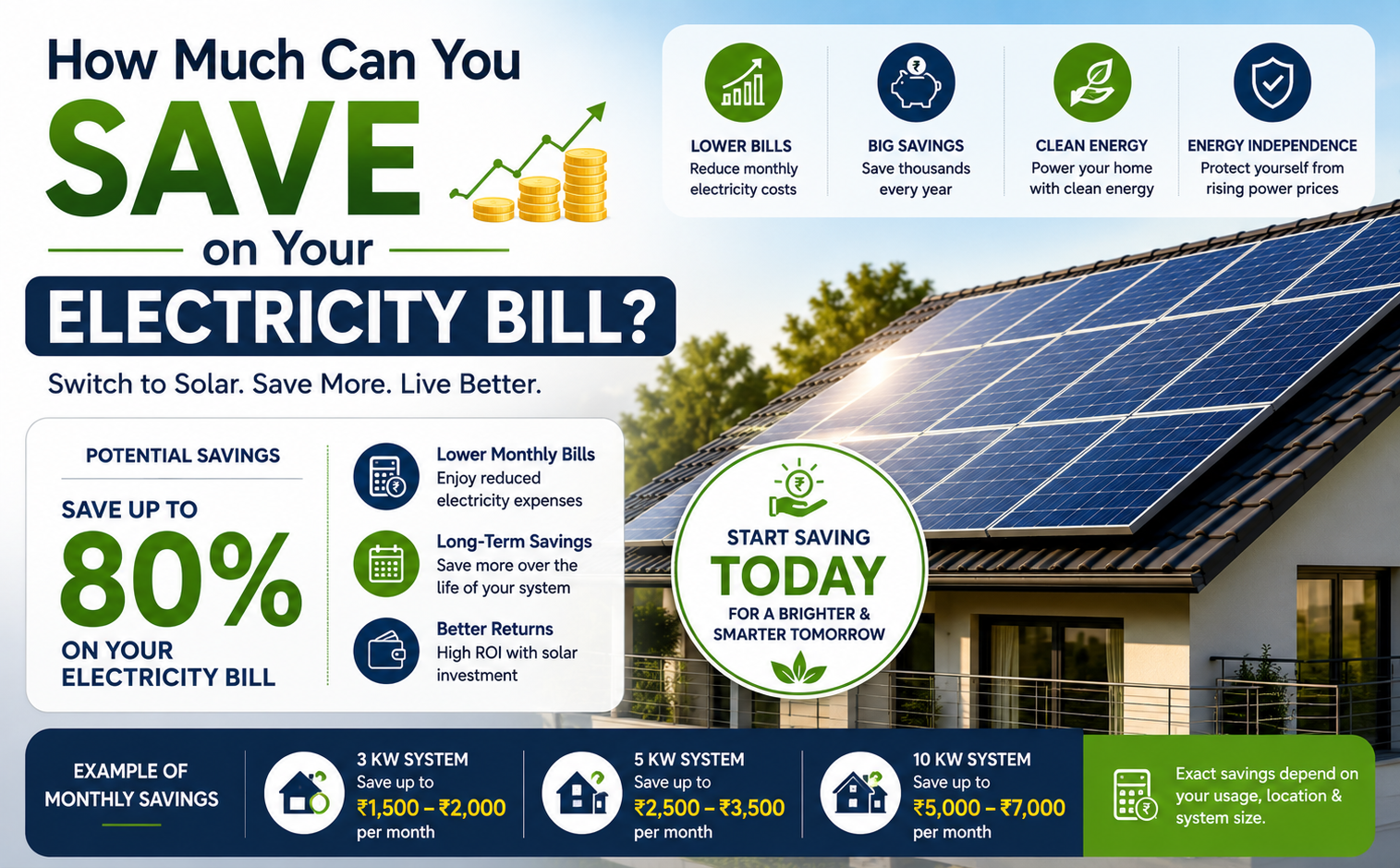
Installing a rooftop solar system can significantly reduce the amount a household spends on electricity by allowing it to generate clean power from sunlight instead of purchasing all of its electricity from the grid. The actual savings, however, depend on several factors, including the home's monthly electricity consumption, solar system capacity, available sunlight, roof orientation, shading, electricity tariff, system performance, and the applicable net-metering or other billing arrangement. A properly designed system can offset a substantial portion of a household's electricity consumption and provide savings over many years.
One of the biggest advantages of a grid-connected rooftop solar system is that electricity generated during the daytime can be used directly by household appliances. When the solar system produces more electricity than the home is consuming, the surplus may be exported to the grid depending on the applicable state regulations and metering arrangement. Under net metering, the consumer is generally billed for the net energy consumed after accounting for eligible electricity exported to the grid. This can reduce the energy component of the monthly electricity bill considerably.
The amount a homeowner can save is closely linked to the size of the solar system. A small system may be suitable for a home with moderate electricity consumption, while a larger system may be appropriate for households with higher usage and sufficient roof space. For example, a household using electricity primarily during daylight hours may obtain greater direct savings because more of the solar generation is consumed immediately. Homes with substantial evening consumption may need to consider the applicable grid-billing arrangement and, where appropriate, battery storage to increase the use of solar energy generated during the day.
Government support can further improve the economics of residential rooftop solar. Under the PM-Surya Ghar: Muft Bijli Yojana, eligible residential consumers can receive Central Financial Assistance for qualifying grid-connected rooftop solar installations. The scheme aims to help households access low-cost or free electricity through rooftop solar, with the implementation period specified in the official guidelines extending to March 31, 2027.
It is important to understand that solar does not necessarily mean that every electricity bill will become completely zero. The official rooftop-solar FAQ explains that consumers may still have fixed or other applicable charges even when solar generation offsets their energy consumption. In some states and billing arrangements, electricity charges can be reduced substantially, and the final bill depends on the applicable regulations, tariff structure, consumption pattern, and amount of solar energy generated and exported.
Before making a purchase, homeowners should compare quotations, verify the applicable subsidy and metering rules in their state, assess the expected annual generation, understand warranties and after-sales support, and confirm that the proposed system is suitable for their actual electricity requirements. The Ministry of New and Renewable Energy and the PM-Surya Ghar programme provide official information on rooftop-solar assistance and implementation requirements, so these sources should be checked for the latest applicable rules before installation.

