How to Get a Government Subsidy for Solar Panels
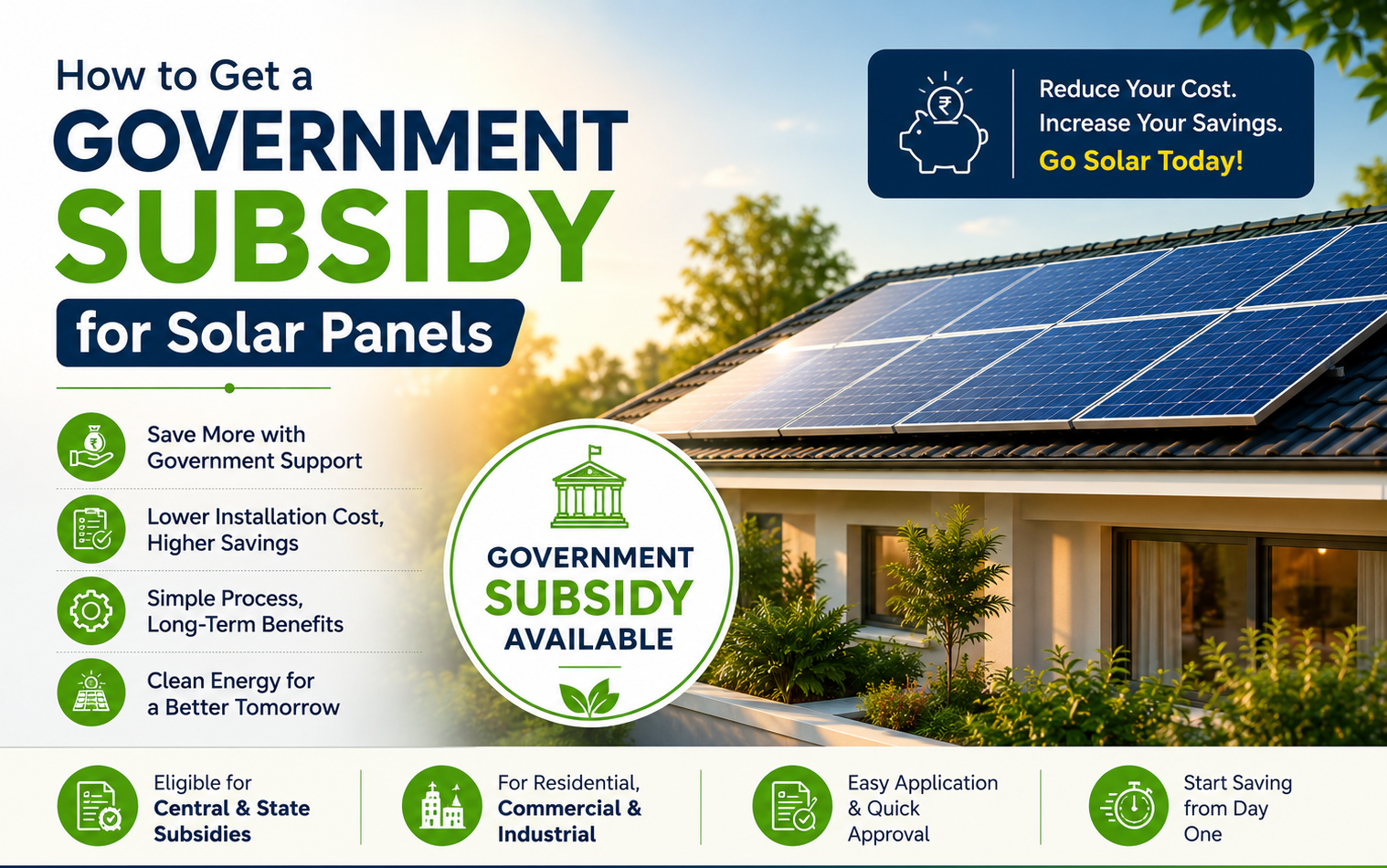
Installing solar panels can become significantly more affordable for eligible residential consumers through government financial assistance. In India, the PM-Surya Ghar: Muft Bijli Yojana provides Central Financial Assistance (CFA) for eligible grid-connected rooftop solar installations, with applications handled through the National Portal and verification carried out through the relevant electricity distribution utility (DISCOM). The scheme is designed to encourage households to generate their own clean electricity while reducing their dependence on conventional grid power and lowering long-term electricity expenses.
To begin the process, homeowners should first check their eligibility and apply through the official PM-Surya Ghar National Portal. The applicant generally needs an eligible residential electricity connection and a suitable rooftop or other permitted installation structure. After submitting the application, the consumer can select an empanelled vendor for the solar installation. The system must meet the applicable technical and equipment requirements under the scheme to qualify for the subsidy. The installed system is then inspected and verified by the concerned DISCOM before the financial assistance is processed.
Under the current scheme structure, Central Financial Assistance is calculated based on eligible rooftop solar capacity. For residential consumers, the published guidelines provide CFA for the first 2 kW and additional assistance for the next 1 kW, while additional capacity beyond 3 kW does not receive further CFA under the standard structure. The actual subsidy amount depends on the applicable benchmark costs and scheme rules, so homeowners should verify the current amount and eligibility requirements before making an investment.
Choosing the right solar installer is also important because the installation must satisfy the scheme's technical requirements and undergo DISCOM verification. A professional installer can help homeowners understand their electricity consumption, determine an appropriate system size, select compliant equipment, complete the installation correctly, and navigate the application and verification process. However, applicants should always verify the vendor's empanelment and the latest government requirements through the official portal rather than relying solely on promotional claims.
Once the rooftop solar system has been installed and successfully verified, the applicable CFA is transferred according to the scheme's process. Depending on the financing arrangement, the assistance may be transferred to the beneficiary's bank account or eligible loan account. Homeowners should also keep their application details, invoices, approvals, installation documents, and DISCOM verification records safely for future reference.
The biggest advantage of combining a government subsidy with rooftop solar is that it can reduce the initial financial burden while helping households generate clean electricity for many years. Solar can reduce the amount of electricity purchased from the grid, potentially lowering monthly bills and providing greater control over long-term energy costs. Before installing a system, however, it is important to compare quotations, evaluate roof suitability, understand applicable state and DISCOM rules, check current subsidy eligibility, and calculate the expected generation and savings. Government schemes and their implementation rules can change, so always confirm the latest requirements from official MNRE and PM-Surya Ghar sources before proceeding.

